Starting seeds indoors is a rewarding way to get a head start on your garden, extend your growing season, and nurture strong, healthy plants before transplanting them outdoors. Whether you’re growing vegetables, herbs, or flowers, the process is simple and requires just a few essential steps.
Choosing Your Seeds
Select high-quality seeds that are suited for your growing zone and climate. Consider varieties that thrive in your area and those that benefit from an early start indoors, such as tomatoes, peppers, eggplants, and many herbs. You can pick up seeds at your local hardware stores, or order them from seed sites. Another great option is a Seed Exchange. See if there are any in your area!
My favorite sites to purchase seeds from:
- Baker Creek Heirloom Seeds
- Johnny’s Selected Seeds
- Seed Savers Exchange
- MIgardener
- Botanical Interests
- Floret Flowers
Gathering Your Supplies
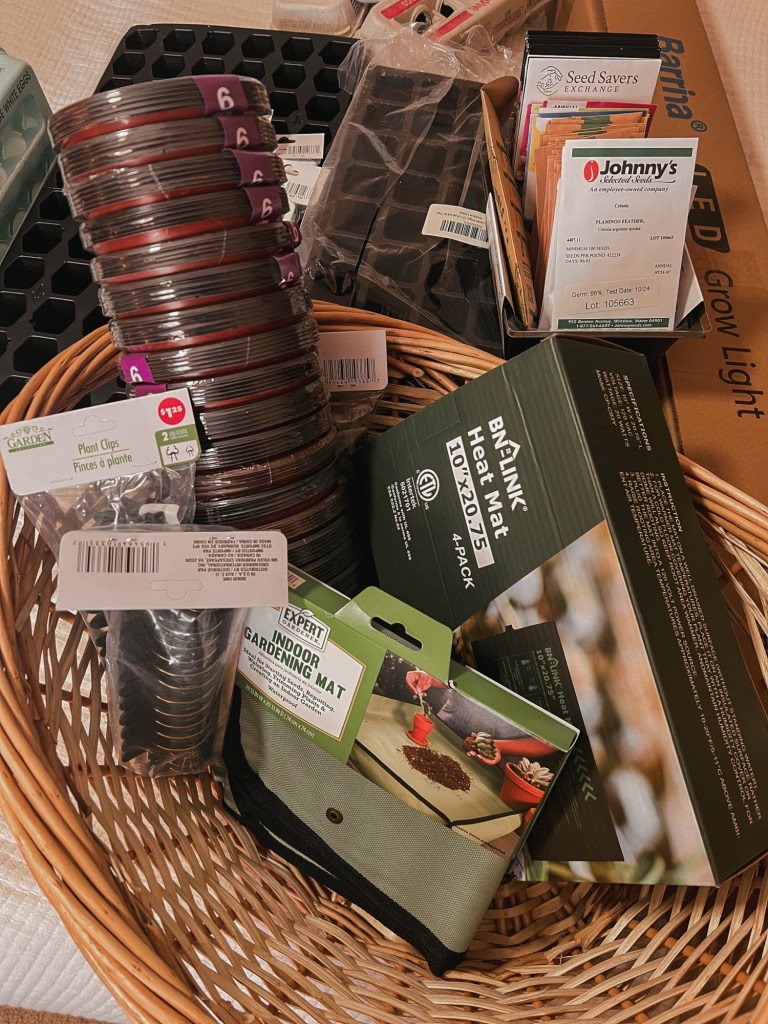
To start seeds indoors, you’ll need:
- Seed trays or small containers with drainage holes
- Quality seed-starting mix (light and well-draining)
- A spray bottle or gentle watering can
- Grow lights or a sunny windowsill
- A humidity dome or plastic wrap (optional for moisture retention)
- Plant labels for organization
Planting Your Seeds
- Prepare the soil – Fill your containers with moistened seed-starting mix, ensuring it’s damp but not soaking.
- Plant the seeds – Follow the depth instructions on your seed packets. Generally, plant seeds about twice as deep as their size.
- Label your containers – Keep track of what you’ve planted by using labels.
- Provide warmth – Most seeds germinate best at temperatures between 65-75°F. A seedling heat mat can help maintain consistent warmth.
Providing Light and Water
- Light: Once seeds sprout, they need 12-16 hours of bright light daily. If using grow lights, position them a few inches above the seedlings and adjust as they grow.
- Watering: Keep the soil consistently moist but not waterlogged. Use a spray bottle or bottom-watering method to avoid disturbing delicate roots.
Caring for Your Seedlings
- Thinning: Once seedlings develop their first true leaves, thin them by snipping weaker plants at the base to allow stronger ones to thrive.
- Air circulation: A small fan can help strengthen stems and prevent mold or damping off.
- Hardening off: About a week before transplanting, gradually expose seedlings to outdoor conditions by placing them outside for a few hours each day, increasing time gradually.
Transplanting Outdoors
When the weather is appropriate for your plant variety, and the risk of frost has passed, carefully transplant seedlings into your garden or larger containers. Water well and monitor them as they adjust to their new environment.
Starting seeds indoors is an enjoyable and cost-effective way to grow a thriving garden. With patience and care, you’ll soon have strong, healthy plants ready to flourish outdoors!
 The Gentle Harvest
Leave a comment